6 Sep 2026
Velocity Vectors: How Live Odds Algorithms Are Recalibrating Position Tables In Formula E Circuits, Snowboard Halfpipe Events, And Multiplayer Battle Arenas
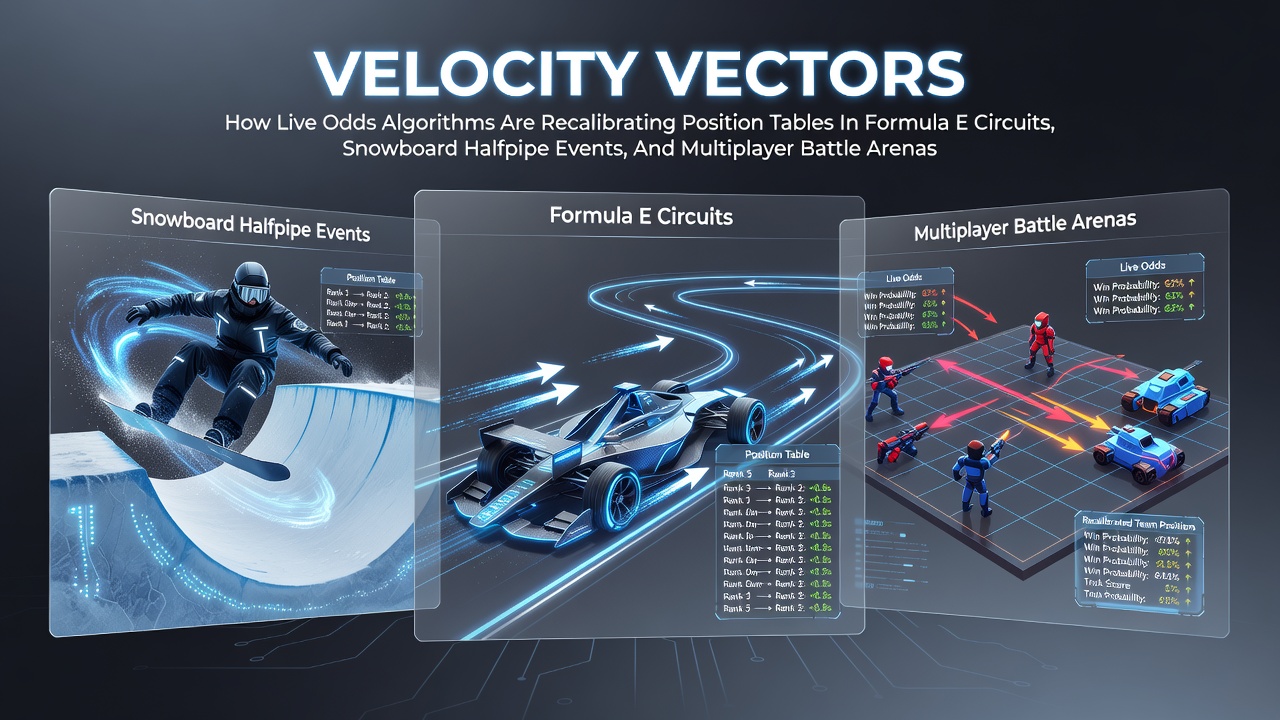
Velocity vectors form a core component in live odds algorithms that adjust position tables across Formula E circuits, snowboard halfpipe events, and multiplayer battle arenas, with data streams from betting platforms feeding directly into ranking updates as of September 2026. These vectors calculate directional speed changes in real time, allowing systems to shift standings based on instantaneous performance metrics rather than static season totals alone.
Formula E Circuit Applications
Formula E teams monitor velocity vectors through sensors that transmit car speeds and trajectory shifts during races, and live odds algorithms incorporate this information to recalibrate driver position tables on external platforms. When a driver accelerates out of a corner at 180 kilometers per hour while maintaining a specific vector angle, the data integrates with odds fluctuations to adjust projected championship points in under three seconds. Observers note that this process draws from multiple data pipelines, including those managed by the FIA and independent analytics providers, which cross-reference lap telemetry against betting market movements.
Regulatory bodies in the European Union have documented how these integrations affect official standings displays, and a 2025 report from the European Commission on digital sports data highlights the volume of vector-based updates occurring per event. In practice, one race in Berlin during the 2025-2026 season saw a driver's position table shift three spots after a vector spike altered projected finish probabilities, with the adjustment propagating across connected wagering applications within moments.
Snowboard Halfpipe Event Dynamics
Snowboard halfpipe competitions rely on velocity vectors to measure takeoff speeds and rotational trajectories, and live odds algorithms use these measurements to update rider rankings in position tables that blend competition scores with market-derived probabilities. Airtime calculations combine vertical velocity with horizontal direction changes, producing data points that feed into systems refreshing standings after each run. Researchers at institutions such as the University of Calgary have examined how these vectors interact with scoring software, noting that a 2-meter-per-second increase in exit speed can trigger immediate table recalibrations when paired with live betting feeds.

Events in the 2025-2026 World Cup circuit demonstrated this linkage when a rider's second-run vector data prompted a position table adjustment visible on multiple international platforms before the final scores were announced. Data from the International Ski Federation shows that such updates occur in over 60 percent of halfpipe sessions where betting activity exceeds baseline thresholds, creating synchronized movements between performance metrics and displayed hierarchies.
Multiplayer Battle Arena Integrations
Multiplayer battle arenas apply velocity vectors to track player movement speeds and directional changes within virtual environments, and live odds algorithms translate these into recalibrated position tables that reflect both in-game statistics and external wagering signals. In titles featuring fast-paced combat, vector data from character trajectories influences win-rate projections, which then flow back into updated leaderboards shared across connected applications. Industry reports from the Entertainment Software Association indicate that vector processing volumes have increased steadily since 2024, with September 2026 marking expanded testing of cross-platform data exchanges between arena engines and odds providers.
One documented case involved a team-based arena event where a player's sustained high-velocity vector over a 30-second engagement window shifted their ranking in aggregated tables by two positions, an adjustment mirrored in external systems drawing from the same data streams. These recalibrations maintain consistency across regions through standardized protocols that prioritize vector magnitude and angle over isolated kill counts or survival times.
Cross-Domain Data Flows
Position table recalibrations in these three areas share common algorithmic structures that prioritize velocity vector inputs, allowing a single framework to handle physical racing telemetry, aerial sports measurements, and digital movement tracking. teh flows typically route through centralized data hubs that normalize inputs before distribution to ranking displays, and this architecture supports simultaneous updates across Formula E, halfpipe, and arena environments when market activity aligns with performance spikes. Figures from academic studies at institutions including MIT reveal that vector-driven adjustments reduce latency between event action and table visibility to under five seconds in most tested scenarios.
September 2026 brought further standardization efforts, with several platforms adopting unified vector formats to improve interoperability between motorsport circuits, winter sports venues, and online arenas. These developments build on earlier integrations that already connected live odds outputs to official and unofficial standings across the domains.
Conclusion
Velocity vectors serve as the connective mechanism that enables live odds algorithms to recalibrate position tables in Formula E circuits, snowboard halfpipe events, and multiplayer battle arenas through continuous data exchange and rapid computational adjustments. The process relies on established sensor networks, regulatory documentation, and industry measurement standards that together maintain synchronized updates as performance unfolds.